
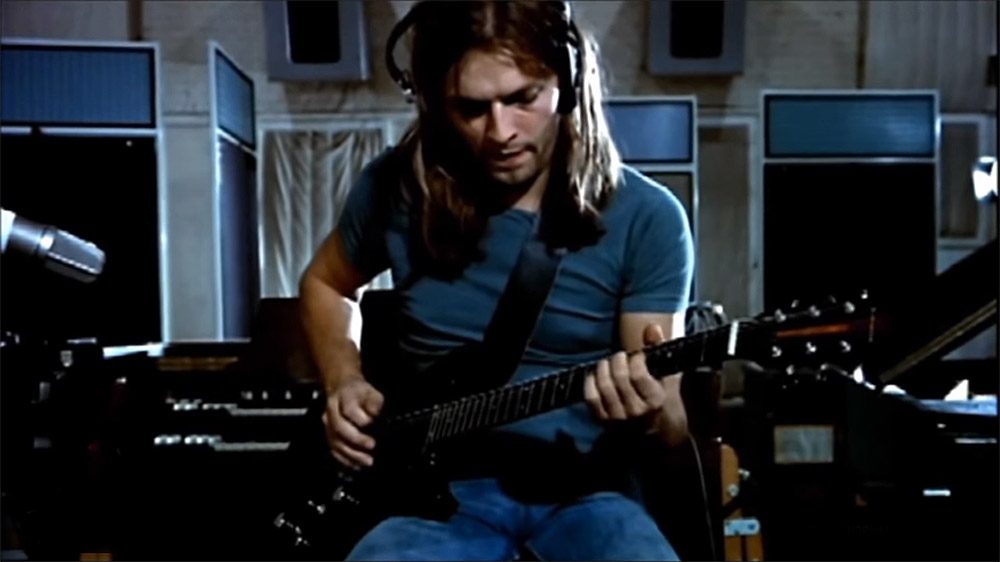
Approfondiamo il discorso sulla chitarra Bill Lewis, usata da David Gilmour in diversi live nei primi anni 70 ed in studio per le registrazioni di brani come “Echoes” e “Money” .
Molto spesso questa chitarra viene presentata anche con il nome Bill Lewis 24fret Guitar, proprio perchè una delle principali caratteristiche è il manico con 24 tasti.
La chitarra non è più prodotta da molti anni e gli unici pezzi prodotti negli anni 60 vengono tenuti dai fortunati proprietari come reliquie.
Tornando alle caratteristiche della chitarra, il corpo è un pezzo unico di mogano dell’Honduras, mentre la tastiera è in ebano.
Queste caratteristiche unite all’utilizzo di pickup custom, garantiscono alla chitarra un suolo cristallino ed un sustain quasi infinito.
Nell’ottobre del 1970 Gilmour era in tour con i Pink Floyd in Canada e lo invitarono a provare le chitarre prodotte dal liutaio Bill Lewis nel suo negozio… David rimase impressionato dalla chitarra e qualche giorno dopo ne acquistò una.
Nelle settimane successive Gilmour utilizzò subito la Bill Lewis in diverse date live del tour.
Nel Dicembre dello stesso anno (1970) i Pink Floyd registrarono alcune sessioni video per la tv Francese, in cui si può vedere Gilmour con la chitarra Bill Lewis.
La chitarra venne usata poi negli anni successivi in studio per le registrazioni del solo di Echoes e per diverse parti di The Dark Side Of The Moon (Money, Brain Damage, Eclipse).
La chitarra è stata filmata nuovamente nel 2003 dalla BBC in occasione del documentario dedicato a The Dark Side Of The Moon, in cui si può ascoltare la chitarra suonata da Gilmour.
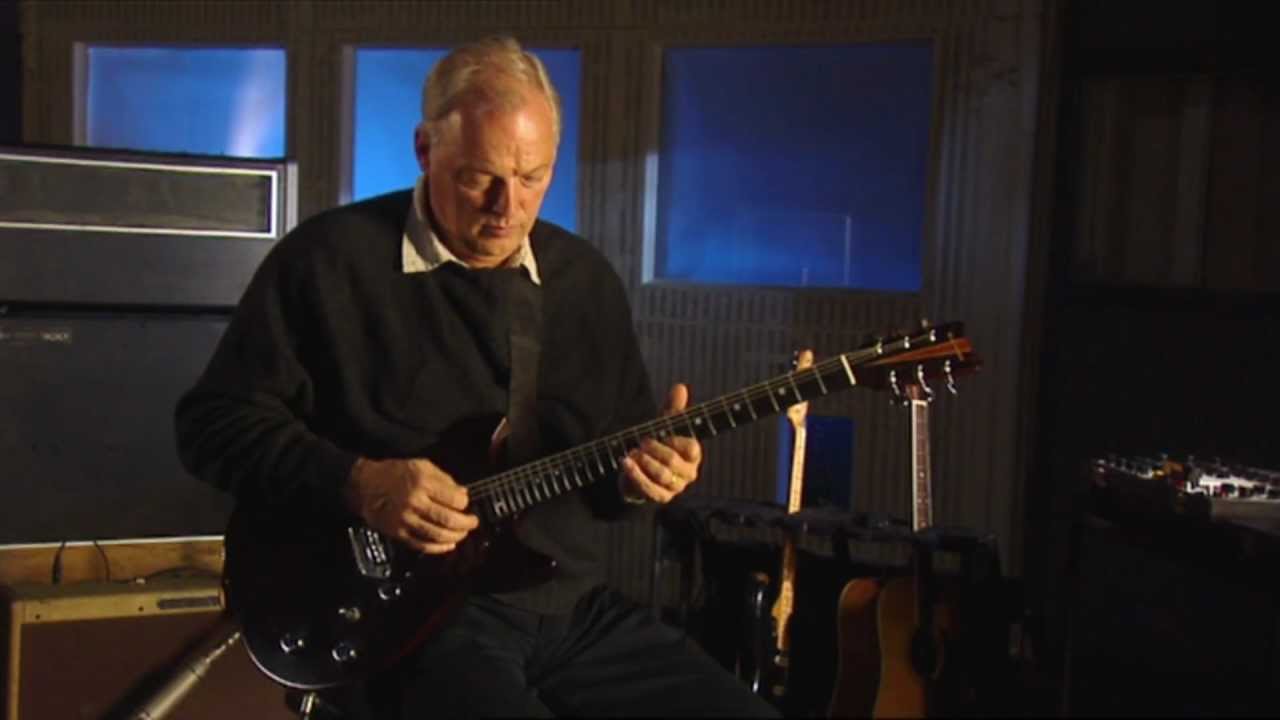
Purtroppo la Bill Lewis Custom Guitar non esiste più, nel 1978 è stata rilevata (insieme con i materiali ed i disegni delle chitarre) dalla Allied Lutherie.
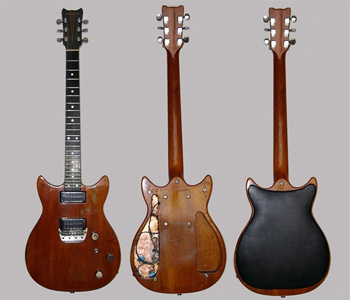
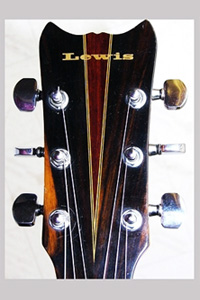
Immagini tratte dal sito raincoast.bc.ca – Le immagini sono di proprietà esclusiva dei titolari
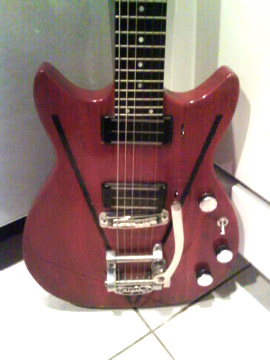
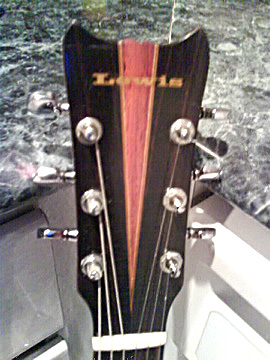
Queste invece sono le immagini che ci ha inviato l’amico Les Clarke della sua bellissima Bill Lewis Guitar.
This Letter was sent to me and I thought your readers would like to see it.
Bill Lewis gtr.
Now there is a name from the past. Bill Lewis was originally a flamenco guitar
player and builder. He studied the instrument in Spain, took master classes with
Andres Segovia, and spent some time working for a small guitar manufacturer
there in the late 50s I believe. The company was ‘Los Guitarerros de
Majorca’. Years ago Bill told me that the Vancouver area builder of
Selmer-type guitars, Michael Dunn and he had worked there together.
Bill also knew another Canadian luthier from the 50s, Frank Gay. Frank was from
the prairies and although he started out as another flamenco player he turned to
building very ornate steel string guitars, one of which he made for Webb Pierce.
That was in the Opry museum for many years. Frank was the guy who turned Lenny
Breau on to flamenco music, and supplied Lenny with his first Ramirez.
Lewis had worked as a design consultant to some of the big names in guitar
manufacturing, and had contacts throughout the industry. Michael Gurian was an
old friend, and I believe Bill helped him set up his small factory again after
Mikes’ tragic fire.
The Lewis guitar shop in Vancouver was a virtual Mecca to pickers in the 60s
and 70s, being one of very few shops in Canada where you could actually get
good, solid information on instruments and their construction.
Bill went on to form Lewis Luthiers’ Supply, offering many special purpose
tools to luthiers, some of which Bill had designed himself and had manufactured
in Europe.
Bills’ brother was apparently in the logging business, and together they
started harvesting and resawing western red cedar which Bill sold worldwide as a
top material. It is my understanding that Bill was instrumental in getting the
material into common useage through his many contacts among classical and
flamenco builders in Spain. He also sold it by the boxcar load to the Japanese
Yamaki company, prompting them to put the first mass produced, entry-level steel
string guitars on the market with solid cedar tops. That would have been some
time around 1969. Those were also sold as Mansfields in some market areas.
Bill put together a wonderful catalogue for Lewis Luthiers’ Supply,
including a lot of technical information and building tips as well as just
flogging product. In that, he was years ahead of the curve. He was generous with
his time and knowledge, especially with younger builders.
I had known him since my days of playing the folk circuit in BC in the late
sixties, so when I applied for a Canada Arts Council grant for some experimental
building I wanted to do around ’75, he was good enough to recommend my work
to the jury. My other sponsor at the time was Sylvia Tyson, of Ian and Sylvia
fame. I suspect the endorsement of those two had as much to do with me getting
that grant as my own work did. 😉 As far as I know, it was the first time a
luthier had been recognized as an ‘artist’ by the Canada Council.
By the eary 80s Bill had grown tired of the business and had sold Lewis
Luthiery to a group of folks in California, where it was transformed into
Luthiers’ Mercantile. That firm continues Bills tradition of packing their
catalogue with useful information as well as the usual sales pitches.
Bill had been a professional photographer during some phase of his incredibly
varied career, and after selling the supply business he went back into that
field, branching into film making.
Around ’81 he was good enough to come and address a gathering of about a
dozen builders and repairmen at my shop in Toronto for a 2-day seminar. Always
the showman, Bill touched on just about every topic possible to imagine during
those two days, and gave the group a lot to think about. Many of his approaches
to luthiery were unconventional, and he had little time for the myths and
legends perpetuated by magazine writers and other self-styled ‘experts’.
He was a very bright man indeed, always pushing to discover how or why
something or other worked or didn’t, and always questioning what others
accepted as ‘conventional wisdom’. One of the best-read men I ever met,
he could converse intelligently on almost any topic, and could entertain with
personal stories and anecdotes until the sun came up.
I’ve only owned one of Bills’ guitars personally, and that only for a
short time. It was one of his flamencos, and I turned it over to a friend who
could actually operate the thing. I do still have a few sets of premium wood
that Bill brought me as a present back in the early 80s. I guess this thread may
serve as the impetus to get me to build a special instrument in memory of a good
friend and a hell of a builder.
If you want you can send me review, images, mp3 and all you want at
info@giampaolonoto.it
Hi Les,
is a real pleasure to have you here, you are welcome.
Very interesting to read your comments on this beautiful guitar, it would be a real pleasure for me to publish a comprehensive review of your Bill Lewis guitar here for all the friends.
If you want you can bring us the sound of your guitar, you can send me the material and will publish immediately.
Thank you for your participation.
I have pictures but cant seem to upload them to your site
The Bill lewis guitars were made in vancouver B.C. Canada. They revolutionized the guitar world by offering the first true 24 fret play, the widest and thinnest neck with silver nickel frets, the guitar was carved out of one piece mahagony the neck was not attached they were able to achieve this by using a double truss rod system in the neck another first.It was fully shielded using the best wire available, pots and copper lined making it virtually noiseless. the sustain on this guitar is endless. It is so clean it will pick up every mistake you make it has made me a much better player over the years. The Pickups were designed and patented by Bills brother and were epoxy encased with three solid silver bars in each. The actual inner workings of these pickups is unknown due to the fact that Bills brother to this day will not discuss how they were made and other than tearing one apart which i don’t think will ever happen the mystery will continue. No one is sure how many were made but it is thought that it is between 40 – 60. I have only seen 5 others. and heard a few more less than 10.
I have the last bill lewis guitar made it was originally made for george harrison it has the splitter switches beside the pick ups on the front of the guitar not like behind on the others, it also has a bigsby tail, and an ebony “v” inlayed on the body of the guitar.